
Pea Gravel: How Much You Need, What It Costs, and Project Ideas
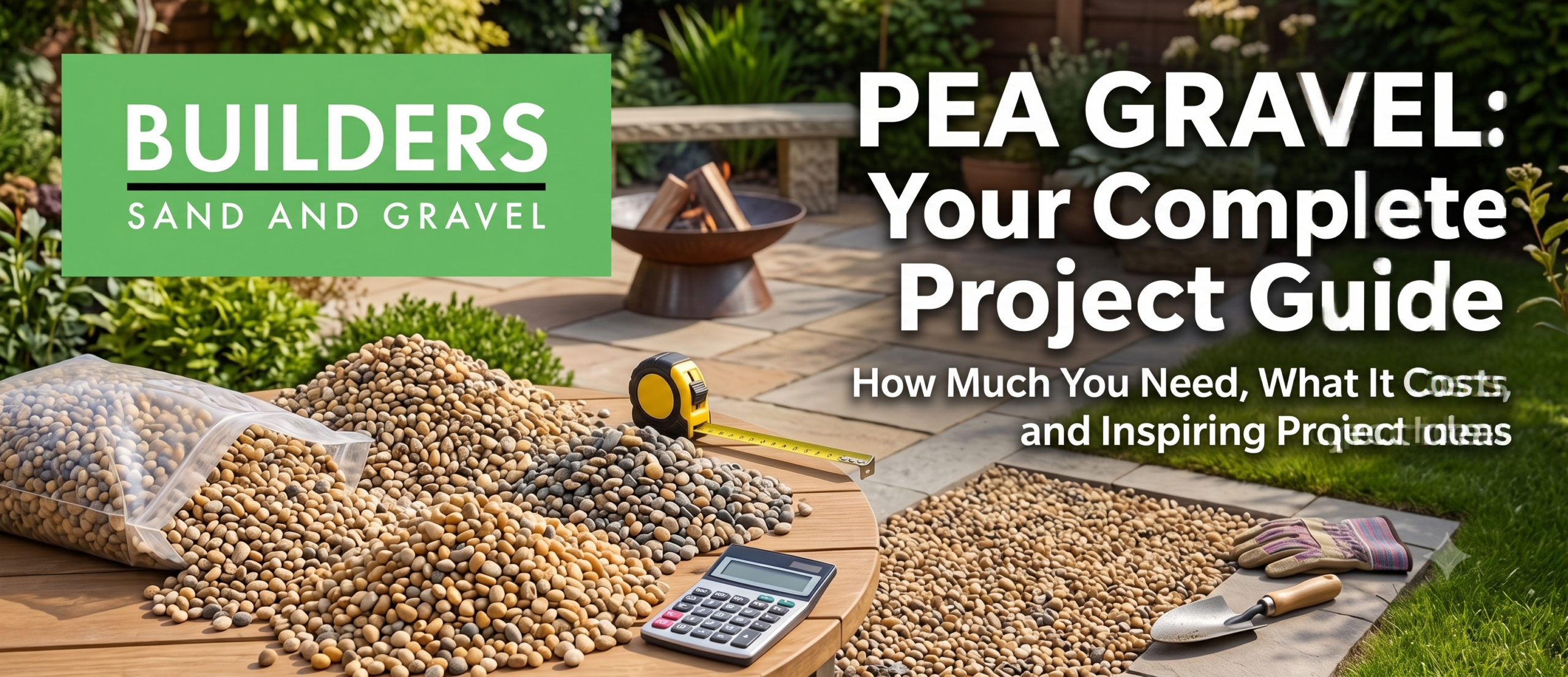
Pea gravel is the material most people reach for when they want a patio, fire pit area, or garden path done over a weekend without pouring concrete. It packs into a firm, walkable surface, drains fast in our wet Pacific Northwest winters, and looks finished on its own. Below is the practical information we get asked about most often when people call to order it – how much to buy, what it costs, and how to put it down so it stays put.
What pea gravel actually is
Pea gravel is small, water-rounded stone screened to about 3/8 inch. The rounded edges are what make it comfortable to walk on barefoot and easy to rake level. It arrives in mixed natural tones of tan, brown, gray, and off-white, so it sits well against most homes and planting beds. Because it is washed before delivery, you are not dealing with the dust and clay film you get from crushed product.
One thing worth knowing up front: pea gravel does not lock together the way angular crushed rock does. That is why it feels loose underfoot and why edging matters so much, which we cover further down.
How much pea gravel you need
This is the question we field most. Work out your square footage first (length times width), then decide on depth. Two inches is plenty for a path or a decorative bed. Go to three inches for a patio or fire pit seating area that will get chairs and regular foot traffic, since a thin layer shifts and shows the fabric underneath.
A cubic yard of pea gravel covers roughly 160 square feet at 2 inches deep, or about 108 square feet at 3 inches. So a 10-by-12 patio (120 square feet) at 3 inches needs a little over one yard – round up to a yard and a half to allow for settling and the low spots you will not notice until the gravel is down.
| Project | Depth | Coverage per cubic yard |
|---|---|---|
| Garden path or border | 2 inches | about 160 sq ft |
| Patio or seating area | 3 inches | about 108 sq ft |
| Fire pit surround | 3 inches | about 108 sq ft |
| Dry creek bed | 2 to 3 inches | about 110 to 160 sq ft |
What pea gravel costs
Once a project is bigger than a few square feet, buying by the cubic yard is far cheaper than bagged gravel. A bag from the hardware store covers a tiny area and a patio can swallow forty or fifty bags, so you pay a premium and spend your Saturday hauling them. Bulk delivery skips both problems. The actual price depends on how many yards you order and how far the truck travels, so the honest answer is to get a quote with your address and quantity rather than trusting a per-bag figure.
Project ideas
Patio. A pea gravel patio is the most popular weekend build. Excavate a few inches, set a firm edge, lay landscape fabric, add a compacted crushed-rock base, and top with pea gravel at about 3 inches. You get a soft, fast-draining surface you can use the same day, at a fraction of the cost of pavers or poured concrete.
Fire pit area. Pea gravel makes a clean, low-maintenance surround for a fire pit. It stays cooler than stone in the sun and gives you a level spot for chairs. Keep the seating zone clear of the flame, and use a metal ring or pavers for the pit itself.
Garden paths. A 2-inch layer over fabric, held in with edging, makes a tidy path between beds. It drains well and is forgiving on uneven ground, so you do not need a perfectly flat run to make it look right.
Dry creek bed. Combine pea gravel with a few larger river rocks to mimic a natural streambed. It doubles as a drainage channel for runoff, which is useful on the wetter properties around here.
Putting it down so it stays put
Most pea gravel problems trace back to two skipped steps: no edging and no base. Loose stone wants to spread, so it will creep into your lawn or beds without a hard border of steel, stone, or pressure-treated lumber to contain it. And on bare soil it sinks and turns muddy, so lay landscape fabric first, then a compacted layer of crushed rock under any patio or fire pit before the pea gravel goes on top. That base is what keeps the surface from rutting when you set a chair on it.
For a fire pit, set the ring itself on the crushed-rock base for stability and reserve the pea gravel for the seating zone around it. It stays cooler than pavers in direct sun and gives you a clean, level spot for chairs.
Common questions
Can you walk on it barefoot? Yes – the rounded edges are why pea gravel is the usual pick for patios and pool surrounds rather than sharp crushed rock.
Will weeds grow through it? Far fewer if you put landscape fabric underneath. A 2 to 3 inch layer over fabric blocks most of them; the occasional seedling pulls out easily.
Is it good for drainage? It drains well, which is why it works for dry creek beds and around downspouts. For a French drain or footing drainage you usually want a larger washed drain rock instead.
Tell us your square footage and we will help you figure the yardage. We deliver pea gravel and washed gravel across Seattle, Bellevue, Everett, and the Eastside, plus crushed rock for your base layer. Contact Builders Sand & Gravel for a delivery quote.