Understanding Topsoil: A Brief Guide
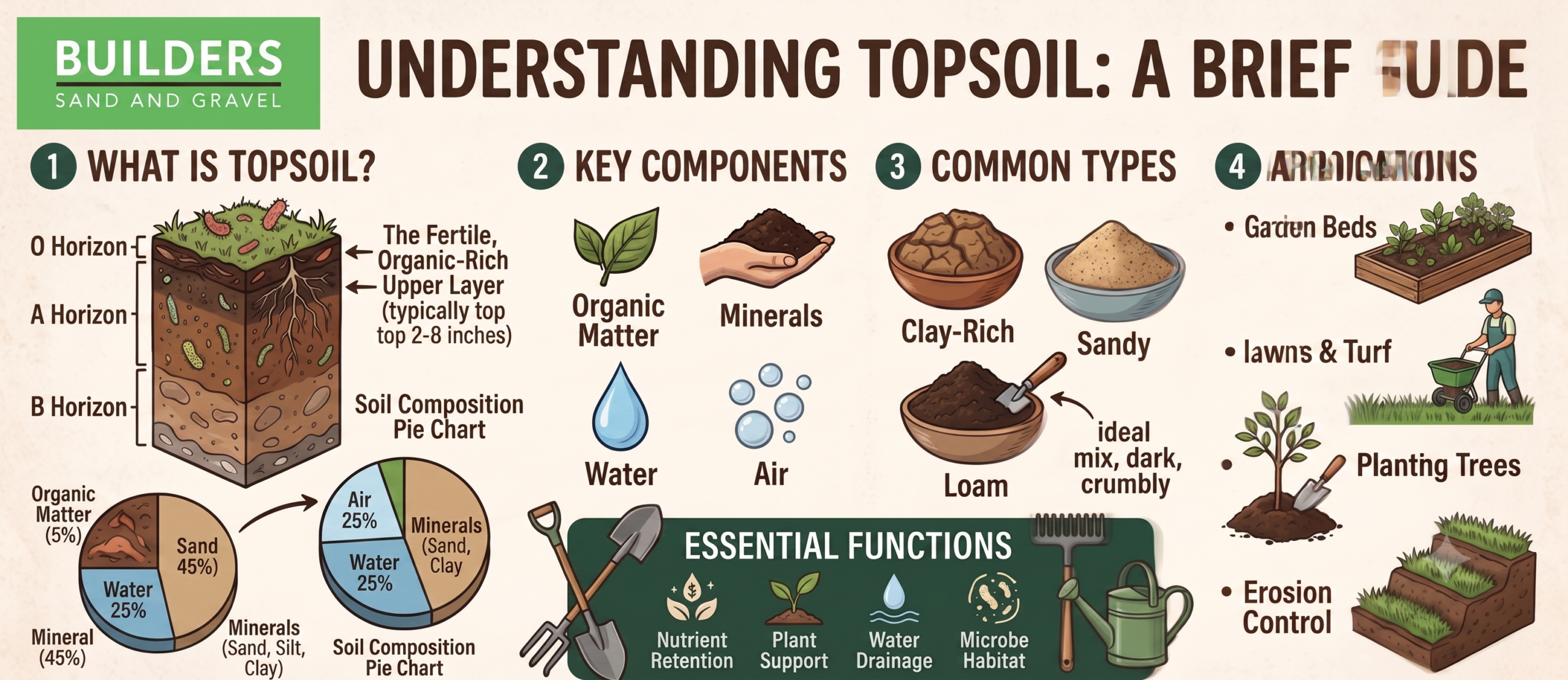
Topsoil is the dark, nutrient-rich top layer of soil where most plants do their growing — and choosing the right kind makes the difference between a garden that thrives and one that struggles. Most people know they need topsoil, but fewer know there are different types or what each is best for. Here is a straightforward guide to what topsoil is, the types available, and how to pick the right one before you order a delivery.
What topsoil is made of
Topsoil is a blend of three mineral particles — sand, silt, and clay — in varying proportions, along with organic matter. A well-balanced, all-purpose topsoil is roughly 60% sand, 25% silt/loam, and 15% clay. Those proportions hold moisture and nutrients while still draining well, which makes it a good growing medium for most plants and shrubs.
The main types of topsoil
Sandy topsoil drains quickly and works well for succulents and drought-tolerant beds. Clay-heavy topsoil holds moisture and nutrients but drains slowly. Loam is the balanced, sought-after mix that suits most gardens. Because proportions vary from supplier to supplier, it is worth ordering from a trusted source so you know what you are getting.
A quick look at topsoil composition
| Component | Typical share | What it does |
|---|---|---|
| Sand | ~60% | Drainage and structure |
| Silt / loam | ~25% | Holds moisture and nutrients |
| Clay | ~15% | Nutrient retention |
How to choose the right topsoil
Match the soil to the garden. Sandier mixes suit succulents and Mediterranean plantings, while balanced loam is ideal for lawns, vegetable beds, and most flower beds. If you are unsure, describe your project to your supplier and they can point you to the right blend.
Topsoil vs. potting soil
A common mistake is using topsoil in containers. Topsoil is meant for in-ground beds, while potting soil is specially formulated and enriched for pots and planters. For anything in a container, reach for potting soil instead.
Starting and finishing your garden
The easiest approach is to source your topsoil and bark mulch from one supplier so everything arrives together. Spread the topsoil, mix it into the existing soil for even distribution, plant your plants, then finish the bed with a layer of bark mulch — often achievable in a single day.
Common questions
What is topsoil made of? A mix of sand, silt, and clay plus organic matter, ideally around 60% sand, 25% silt/loam, and 15% clay.
What are the types of topsoil? Sandy, clay-heavy, and loam — with loam being the balanced all-purpose choice.
Can I use topsoil in pots? It is best not to. Use potting soil for containers, since it is enriched for that purpose.
How much topsoil do I need? It depends on the area and depth of your bed. Tell us your project and we can help you estimate.
Planning a garden? Tell us about your project and we will recommend the right topsoil and bark. Contact Builders Sand & Gravel for topsoil delivery across Seattle, Bellevue, and Snohomish County.