
River Rock vs. Pea Gravel vs. Drain Rock: How to Choose
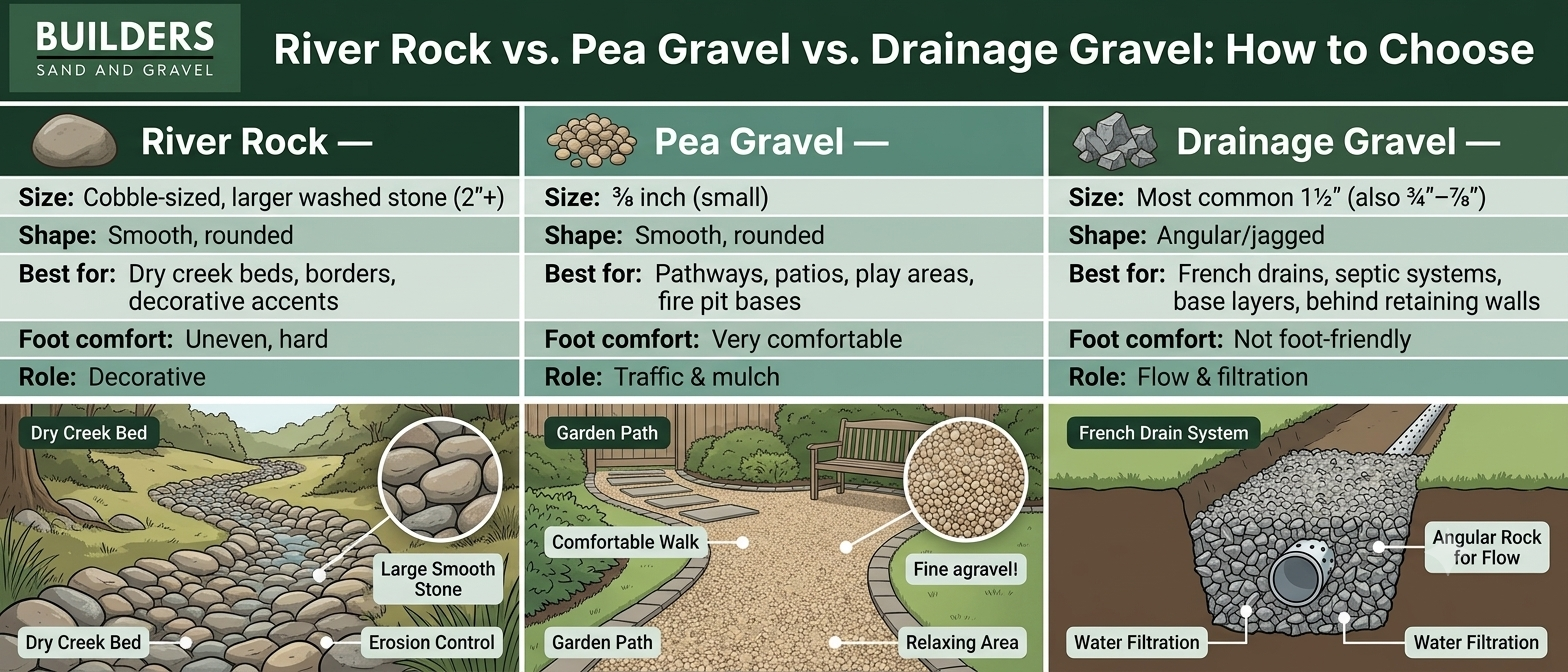
Trying to decide between river rock, pea gravel, and drain rock? They are all washed stone, but they are not interchangeable, and choosing the wrong one is the most common reason a project disappoints. This guide compares the three side by side so you can pick the right material for your specific job, whether that is a landscaping bed, a French drain, a patio, or a play area. (If you just want a plain-English explainer of what washed gravel is, see our guide to what washed gravel is and why to use it.) When it comes to choosing, the size and shape of the stone is what matters most. Here is how the three compare and when to use each.
| Material | Typical size | Best for |
|---|---|---|
| River rock | Cobble-sized (larger washed stone) | Dry creek beds, borders, accents, decorative ground cover |
| Drainage gravel (drain rock) | Most common 1½”; also ¾” or ⅞” | French drains, septic systems, behind retaining walls, base layers |
| Pea gravel | About ⅜ inch | Pathways, patios, fire pit bases, play areas, container drainage |
River rock: the decorative choice
River rock is smooth, rounded stone usually in oversize, cobble sizes larger than two inches. Its size and natural coloring make it the go-to material when looks matter. It is most often used to build the dried-riverbed effect that has become so popular in low-water landscaping, and it works well for planting strips, flower-bed borders, and property accents. Because the stones are larger and heavier, river rock also resists washing away on a slope better than the smaller materials.
Drainage gravel: the workhorse
Drainage gravel, often called drain rock, is washed stone chosen for its ability to let water move through it freely. The most common size is 1½”, with smaller ¾” and ⅞” options for tighter spaces. Because the larger stones create more open space for water, drainage gravel is much better suited to bigger jobs: French drains, septic drain fields, the gravel layer behind a retaining wall, and base layers under pavers. If your goal is moving water rather than appearance, this is the material you want.
Pea gravel: the small, versatile option
Pea gravel is the smallest of the three, roughly three-eighths of an inch, with a smooth, colorful, rounded look. Its small size makes it comfortable underfoot, which is why it is popular for pathways, patios, and play areas, and it makes a clean, well-draining base under a fire pit. The same small size means it can scatter more easily than river rock, so edging helps keep it contained on paths and patios.
Which one should you order?
Match the stone to the job. Choose river rock when the look is the point and you want larger decorative stone that stays put. Choose drainage gravel when the job is about moving water through a drain, a wall, or a base layer. Choose pea gravel when you want a comfortable, finer surface for a path, patio, or play space. Many projects use more than one, for example drainage gravel as a base with pea gravel or river rock on top.
Common questions about washed stone
What’s the difference between river rock and pea gravel? River rock is larger, smooth, rounded stone (in oversize cobble sizes (larger than 2 inches)) used mainly for decorative work. Pea gravel is much smaller (about ⅜ inch), which makes it comfortable underfoot for paths, patios, and play areas.
Which gravel is best for drainage? Drainage gravel (drain rock) is the best choice for moving water. The most common size is 1½”, with smaller ¾” and ⅞” options for tighter spaces, and it’s used for French drains, septic fields, retaining-wall backfill, and base layers.
What size river rock should I use? For most decorative uses, river rock in oversize cobble sizes (larger than 2 inches) works well. Larger stone stays in place better on slopes, while smaller washed stone is easier to walk on.
Can I use more than one type in a project? Yes. Many projects layer drainage gravel as a base with pea gravel or river rock on top, combining good water movement with the look or feel you want on the surface.
Ordering washed stone in King or Snohomish County?
We deliver river rock, drainage gravel, and pea gravel throughout the greater Seattle area. Drain rock & washed gravel | Contact us for a quote
Want the basics first? Read what washed gravel is and why to use it in our guide to What Is Washed Gravel? or read our full pea gravel project guide.